
Mastering
Laying Patterns
The arrangement of tiles is as critical as the selection of the material itself. Discover the geometry that defines modern spatial excellence.
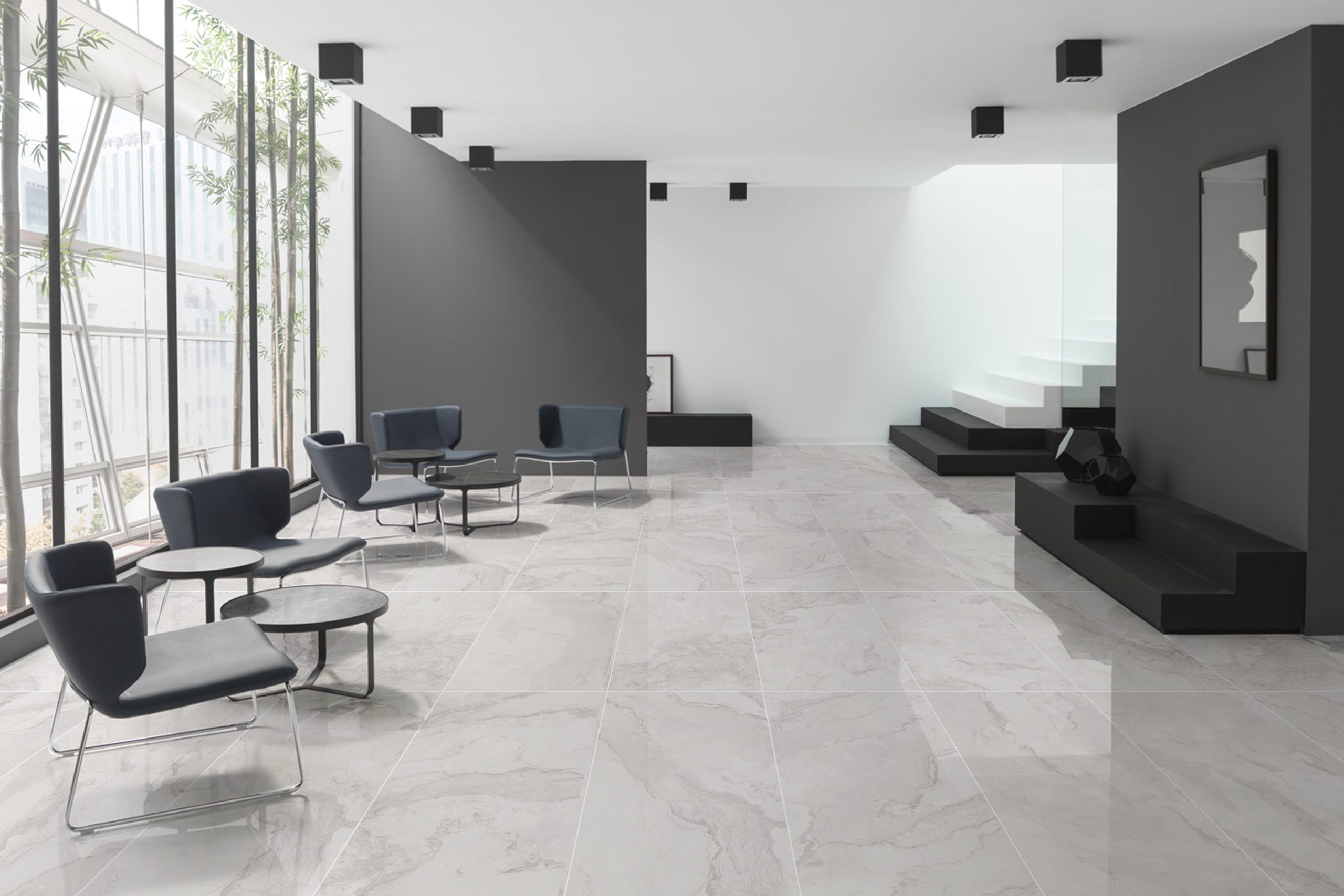
Layout patterns don't just fill a space; they direct the eye, manipulate light, and redefine the architectural proportions of a room.
When specifying premium porcelain tiles, particularly large-format slabs and wood-look planks, the geometric arrangement—or laying pattern—determines the final aesthetic integrity of the project. A poor layout choice can compromise even the most expensive materials, while a masterfully planned pattern elevates the entire architectural narrative.
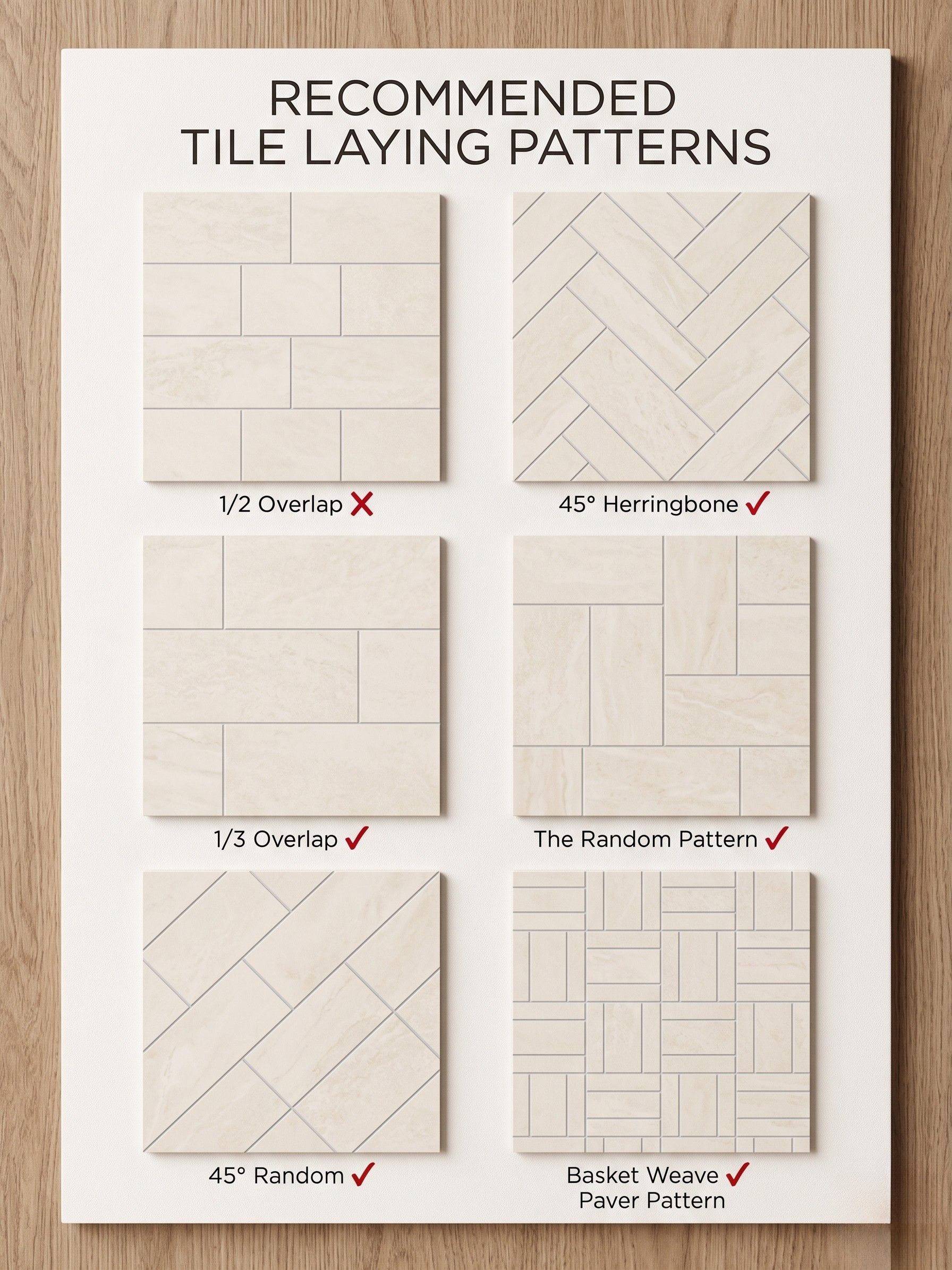
The Running Bond: The 1/3 Rule
As highlighted in our technical diagram above, a common misconception in plank tile installation is the use of a 50% (half-brick) offset. For large-format porcelain, this is highly discouraged. Due to the natural curing process of ceramics, long tiles can have a slight bow in the center.
Placing the lowest point of one tile next to the highest point of another creates "lippage" (uneven edges).
The professional standard. It distributes height variations evenly, resulting in a flat, seamless, and visually rhythmic finish.
"Venicera Ceramiche provides the canvas; your laying pattern creates the masterpiece."
Architectural Geometry
Beyond the standard straight lay, complex geometries can be employed to create focal points or define functional zones within an open-plan space.
- 01.45° HerringboneThe pinnacle of classical elegance. By placing tiles at a 45° angle, it creates a visual "V" shape that elongates the room and guides the eye forward.
- 02.Random PatternDesigned to mimic the organic feel of natural materials. By avoiding a repetitive grid, joint lines become less noticeable, allowing the material texture to take center stage.
Planning for Complexity
Intricate patterns require significantly more cuts at the perimeter of the room.
Herringbone & Chevron layouts.